
Baby's breath
 | Origin Southern, Central, and Eastern Europe to Siberia | |
 | Family Carnation family | |
 | Flowering May to September | |
 | Sunny |
Origin:
Gypsophila, also known as baby's breath, belongs to the carnation family (Caryophyllaceae) and originates from Europe, Asia, and North Africa. It is particularly at home in dry, chalky soils.
Growth:
Gypsophila is a perennial, herbaceous plant that can reach a height of 30 to 100 cm. It has a bushy, branched growth habit with fine, wiry stems that give it an airy, light appearance.
Leaves:
The leaves of gypsophila are narrow, lanceolate, and gray-green. They are arranged alternately and are relatively inconspicuous, as the plant is mainly valued for its flowers.
Flowers:
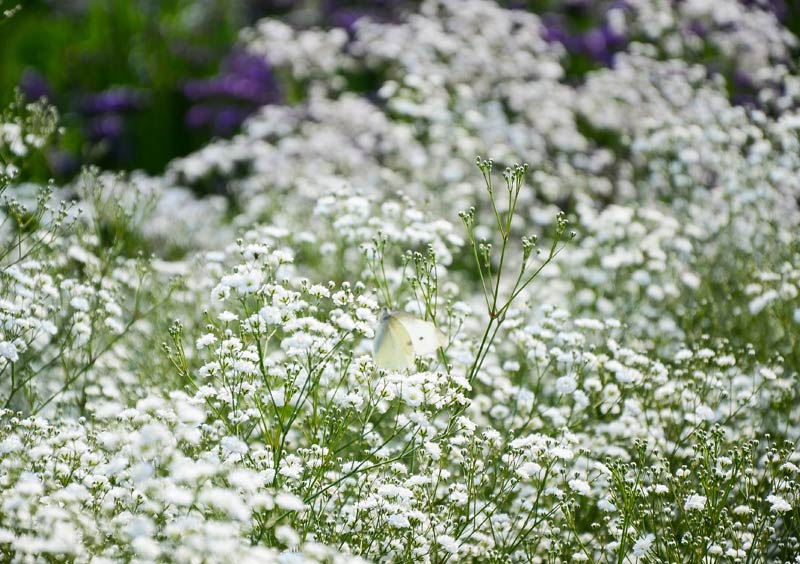
The flowers of the gypsophila are small, white or pink and arranged in dense panicles. They bloom in summer, typically from June to August, and form a cloud-like, delicate sea of flowers. The flowers are very popular with florists and are often used in bouquets and flower arrangements.
Location
Baby's breath prefers a sunny location with well-drained, calcareous soil. It thrives particularly well in dry, sandy or stony soils and is tolerant of periods of drought. Waterlogging should be avoided as it can lead to root rot.
Care
Cyclamen is easy to care for and requires minimal maintenance. It should only be watered sparingly as it prefers dry conditions. Fertilization is not usually necessary, but can be done in spring with a balanced fertilizer to promote growth. After flowering, the plant can be cut back to encourage compact growth and improve appearance. In colder climates, light winter protection with mulch is helpful to protect the roots from frost.
Discover our range of flowers
We deliver to every private address, every business or office, every hospital or rehabilitation clinic, and of course every retirement and nursing home in Switzerland. Whether you want a bouquet, a flower arrangement, or roses.
We also have a special range for special occasions such as: