

Tulip blooming season –
Early, mid-season, or late blooming
When do tulips bloom in the garden?
Tulips are one of the most popular spring flowers—colorful, elegant, and versatile. But not all tulips bloom at the same time. The tulip flowering time and season depend on several factors: the variety, the planting time, the soil conditions, and the local climate. If you want to make your garden colorful, you can achieve continuous flowering from March to June by choosing the right varieties and planting strategy.
Early-blooming varieties produce their flowers as early as March, mid-season tulips usually bloom in April to early May, and late-blooming varieties beautify the garden in May and sometimes into June. This staggered planting allows for continuous bloomingthese staggered planting times allow for continuous flowering, which is ideal for flower beds, borders, rock gardens, or planters.
The location also plays a decisive role: sunny spots promote rapid flowering, while partial shade slightly delays flowering. The soil should be well-drained and rich in nutrients to ensure strong, healthy plants. Taking these factors into account will prolong the flowering period and increase resistance to disease.
Tulip varieties

Early-blooming tulips (March–April)
Early-blooming tulips are the pioneers in the garden. They signal the beginning of spring when nature slowly awakens after the long winter months. These varieties are particularly popular because they bring color to the flower bed as early as March and provide the first joy of blooming. Typical early-blooming species are Kaufmanniana tulips, botanical tulips (wild tulips), and early-blooming Triumph tulips. They are characterized by their compact growth habit, sturdy stems, and often two-toned, vibrant flowers.
Location & soil
Early bloomers prefer sunny to semi-shaded locations. Well-drained soil is crucial to prevent waterlogging, which could damage the bulbs. Good drainage is particularly important for container plantings. The bulbs should be planted about 4–5 inches deep in the fall. A light organic fertilizer in the spring promotes vigorous blooms and healthy plants.
Care & flowering
Early-flowering tulips need regular watering, especially on dry spring days. Removing wilted flowers allows the plant to store its energy in the bulb, ensuring that it will bloom vigorously again the following year. These tulips are also very well suited for rock gardens, balconies, or borders.
Combination ideas
Early-blooming tulips can be beautifully combined with crocuses, blue stars, daffodils, or primroses. By skillfully mixing different colors and heights, you can create a harmonious overall picture. They also go well with natural beds where the flowers are allowed to grow freely.
Language of flowers
In the language of flowers, early-blooming tulips symbolize new beginnings, hope, and a fresh start. Their early blooms represent the end of winter and the fresh energy of spring.
Feature | Description |
|---|---|
Kaufmanniana | Flowering period: March–April Height: 15–20 cm Color: Red, yellow, orange Location: Sun/partial shade Special features: Ideal for flower beds and rock gardens |
Botanical tulips | Flowering period: March–April Height: 10–20 cm Color: Yellow, white, pink Location: Sun/partial shade Special features: Very robust, small growth |
Early Triumph tulips | Flowering period: March–April Height: 25–30 cm Color: Red, pink, purple Location: Sun/partial shade Special features: Good for cut flowers |
Greigii tulips | Flowering period: March–April Height: 20–25 cm Color: Red, yellow, striped Location: Sun/partial shade Special features: particularly decorative leaf pattern |

Medium early flowering tulips (April–May)
Mid-season tulips are the highlight of the tulip season and can be found in almost every garden. They bloom in April and May and are ideal for adding color and structure to flower beds. The most popular varieties include Darwin hybrids, Triumph tulips, and double late Triumph tulips. Darwin hybrids are characterized by long stems, large flowers, and a particularly long shelf life, while Triumph tulips offer an enormous variety of colors and are also very well suited for mixed plantings.
Location & soil quality
These tulips prefer sunny to semi-shaded locations and nutrient-rich, loose soil. The planting depth should be between 12 and 15 cm, depending on the size of the bulb. A spring fertilizer promotes vigorous flowering and ensures a particularly long flowering period.
Care & blooms
Mid-season bloomers benefit from removing faded flowers to direct energy to the bulb. Regular watering during dry periods is important, especially for plants in pots or loose beds. These tulips are ideal for cut flowers as they have long-lasting stems.
Combination possibilities
Mid-early blooming tulips can be optimally combined with perennials such as cranesbill, anemones, primroses, or cushion perennials. For a harmonious bed, you can plant early bloomers in front and late bloomers behind to achieve a natural gradation in height and flowering time. Contrasts can also be created in terms of color, e.g., red tulips next to yellow or white varieties.
Flower messages
In the language of flowers, mid-early blooming tulips represent love, joy, and harmony. They symbolize the transition from fresh spring to full bloom, making them particularly popular for decorative gardens and festive arrangements.
Feature | Description |
|---|---|
Parrot tulips | Flowering period: May–June Height: 50–70 cm Color: Colorful streaks, red, yellow, orange Location: Sun/partial shade Special features: Eye-catching due to fringed flowers |
Lily-flowered tulips | Flowering period: May–June Height: 40–60 cm Color: White, pink, red Location: Sunny to partial shade Special features: Elegant, pointed petals |
Fosteriana tulips | Flowering period: May–June Height: 35–50 cm Color: Red, yellow, orange Location: Sun/partial shade Special features: Extends the flowering season in the garden |
Single-flowering Triumph tulips | Flowering period: May–June Height: 40–50 cm Color: Red, violet, pink Location: Sunny to partial shade Special features: Stable, long-lasting for late plantings |
Late-blooming tulips (May–June)
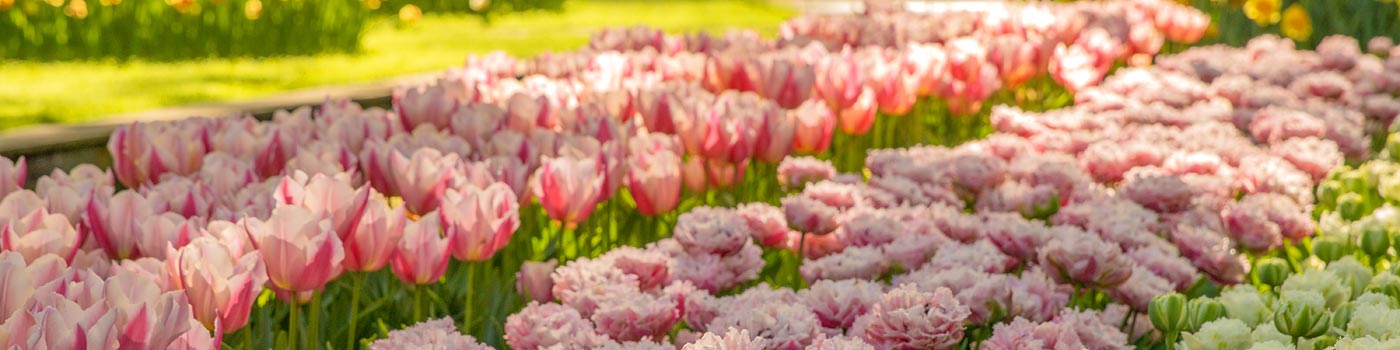
Late-blooming tulips are the last to finish for the season, keeping your garden colorful even in late spring and early summer. Some of the most popular varieties include parrot tulips, lily-flowered tulips, and Fosteriana tulips. Parrot tulips impress with their striking, jagged petals, lily-flowered varieties captivate with their elegant, slender shape, and Fosteriana tulips are characterized by large flowers and vibrant colors.
Location & soil quality
Late-flowering tulips require sunny to semi-shaded locations and well-drained, nutrient-rich soil. Regular watering during dry periods ensures vigorous flowering. Here, too, removing faded flowers allows the plant to store its energy for the following year.
Care & flowering
Late bloomers are often somewhat more resistant to weather fluctuations. They are well suited for beds, planters, or mixtures with peonies, delphiniums, or hydrangeas to create a long, staggered flowering period. The plants can also be used as cut flowers, as they have long stems and the flowers stay fresh for several days.
Combination & garden effects
Late-blooming tulips harmonize with perennials and summer flowering plants, allowing the colorful splendor of spring to transition into early summer. Parrot tulips can be used as highlights in flower beds, while lily-flowered varieties can be scattered harmoniously in between. In terms of color, bold reds or warm yellows and oranges can be used as eye-catchers.
Language of flowers
In the language of flowers, late-blooming tulips represent elegance, energy, and endurance. They symbolize the end of the flowering season and the beauty of the late spring months, which are often less frequented but have a particularly intense effect.
Feature | Description |
|---|---|
Parrot tulips | Flowering period: May–June Height: 50–70 cm Color: Colorful streaks, red, yellow, orange Location: Sun/partial shade Special features: Eye-catching due to fringed flowers |
Lily-flowered tulips | Flowering period: May–June Height: 40–60 cm Color: White, pink, red Location: Sunny to partial shade Special features: Elegant, pointed petals |
Fosteriana tulips | Flowering period: May–June Height: 35–50 cm Color: Red, yellow, orange Location: Sun/partial shade Special features: Extends the flowering season in the garden |
Single-flowering Triumph tulips | Flowering period: May–June Height: 40–50 cm Color: Red, violet, pink Location: Sunny to partial shade Special features: Stable, long-lasting for late plantings |
Regional characteristics
The flowering period of tulips depends greatly on the region and climatic conditions. If you want to enjoy the flowers at their best, you should choose the right varieties for your location.
Cool north/higher altitudes: In regions with cooler temperatures and higher altitudes, tulips usually bloom a little later. Here, it is advisable to plant early and mid-early bloomers in order to make the most of the flowering season. Late-blooming varieties often do not appear until May and can therefore beautify the garden until June.
Milder regions/south: In warmer areas, early bloomers sometimes appear as early as February, while late bloomers bring color to the flower bed until June. The mild temperatures allow tulips to bloom earlier and be enjoyed for longer.
Urban heat islands: In cities or particularly warm locations, tulips benefit from sheltered, semi-shaded areas. There, the flowers last longer and are less susceptible to sun stress or dehydration.
With these tips, hobby gardeners can plan their planting specifically to achieve a continuous flow of flowers from spring to early summer.
Tips for continuous flowering in the garden
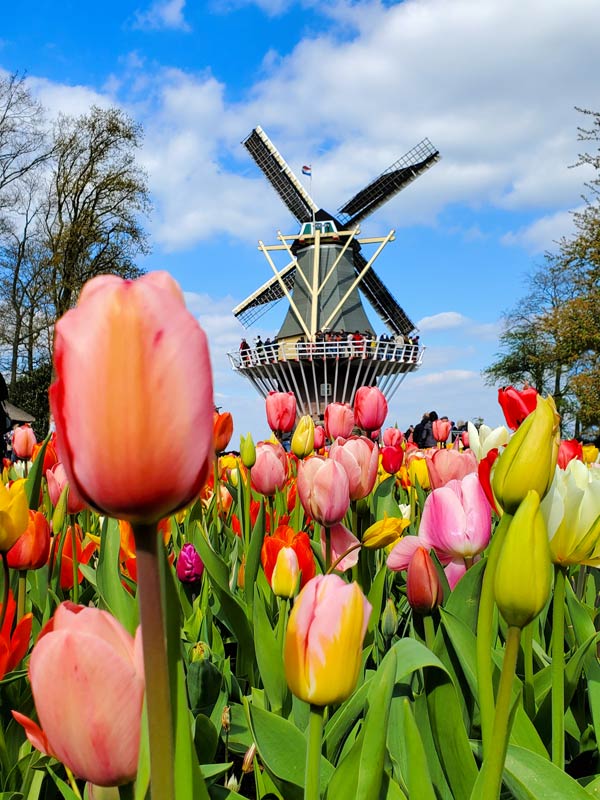
If you want to enjoy a garden full of tulip colors from March to June, you should follow a few simple planning and care tips:
Combine early, mid, and late bloomers
Plant varieties from all three flowering phases to maintain continuous color.
Early bloomers start in March, mid-early bloomers in April to early May, and late bloomers bloom until June.
Choose different heights and flower shapes
Staggering heights and shapes creates a lively, natural impression.
Example: low botanical tulips in front, tall parrot tulips in the back.
Consider location and soil
Prefer sunny to semi-shaded locations.
The soil should be well-drained and rich in nutrients for strong flowers and healthy bulbs.
Watering and fertilizing
Water regularly during dry periods.
Fertilize lightly, especially for medium-early and late-flowering varieties, to support strong blooms.
Remove dead flowers
Removing dead flowers in good time allows the tulip to concentrate its energy on the bulb and ensures strong flowering the following year.
Combination with other spring flowers
Early bloomers harmonize with crocuses, blue stars, and daffodils.
Combine mid-early blooming tulips with perennials such as anemones or cranesbill.
Late-blooming varieties are ideal together with peonies or delphiniums.
These tips will help you create a continuous flow of flowers that will keep your garden colorful for weeks – perfect for beds, borders, pots, or cut flowers.
Conclusion: Tulip blooming period & season
Make the most of flowering times
Early, mid, and late blooming Tulip varieties for every flowering season ensure that your garden or vase will be bursting with color for weeks on end. By carefully combining different varieties, you can extend the flowering season and constantly add new splashes of color— from the first delicate blooms in spring to the rich colors of late spring or early summer. This will keep your garden lively and varied.
Consider care and location
Proper care, regular watering, and an optimal location are crucial for getting the most out of each plant's flowering period. On our page Planting & caring for tulips you will find practical tips on soil, light conditions, and care measures to ensure that your tulips remain healthy and bloom reliably year after year.
Enjoy tulips right away
If you want to bring the beauty of tulips into your home right away, you can Buy tulip bouquets online for yourself or as a thoughtful gift. This way, the colorful arrangements can be placed directly in vases and bring instant joy.
Further information
Back to the our tulip overview page. Here you will find additional inspiration, tips on choosing varieties, and care instructions so that you can plan the flowering season optimally and make every season a colorful experience.
FAQ – Tulip blooming period & season
When do tulips bloom in spring?
Early bloomers from March, mid-early bloomers in April–May, late bloomers in May–June.
Which tulip variety is suitable for the garden?
Combination of early, mid-season, and late bloomers; popular varieties: Kaufmanniana, Darwin hybrids, Triumph, and Parrot tulips.
How long do tulips bloom?
1–3 weeks per variety; removing flowers prolongs energy for bulbs.
Can I also plant tulips in pots?
Yes, deep enough and well-drained soil, ideal for balconies and terraces.
Which combinations look attractive in the flower bed?
Early bloomers with crocuses/bluebells, mid-season bloomers with perennials, late bloomers with peonies/delphiniums.
Which regions have the best flowering season?
Cool north: prefer late bloomers, south: early bloomers as early as February, late bloomers until June, cities: partial shade → longer flowering period.